Most people choose a shed on two numbers: price and size. Fair enough. They are the easy ones to compare.
But there is a third factor that decides whether your shed goes up in an afternoon or sits half-built in the backyard for a month, and hardly anyone mentions it before you buy. It is how the shed is built: flat-pack or panel form. Get that choice right and the rest looks after itself. Get it wrong and the build becomes the problem.
Here is how the two methods actually work, and how to pick the one that suits you.
The short version
Flat-pack sheds are cheaper at the checkout and generally easy to set up, but you build them yourself from a box of parts. Panel-form sheds cost more upfront and need room for delivery, but they turn up as pre-built sections that go up faster, sit square, and have fewer joins to leak.
Choose flat-pack if budget comes first and you are handy with tools. Choose panel form if you want the shed up quickly and finished properly, or you would rather not build it yourself.
What a flat-pack shed actually is
A flat-pack shed turns up as a box of separate parts. Wall sheets, roof sheets, channels, brackets, and a bag of self-tapping screws. You assemble every piece yourself, on site, working from an instruction manual.
Let us be fair about flat-pack, because it has genuine advantages. It is usually the cheapest way to buy a shed. It ships in a flat carton, so freight is cheaper and the box fits through a standard side gate. And you can often grab one off the shelf the same day.
The thing is, every one of those advantages is about buying and shipping the shed. None of them is about building it. The real cost of a flat-pack shed turns up after you open the box.
What a panel-form shed actually is
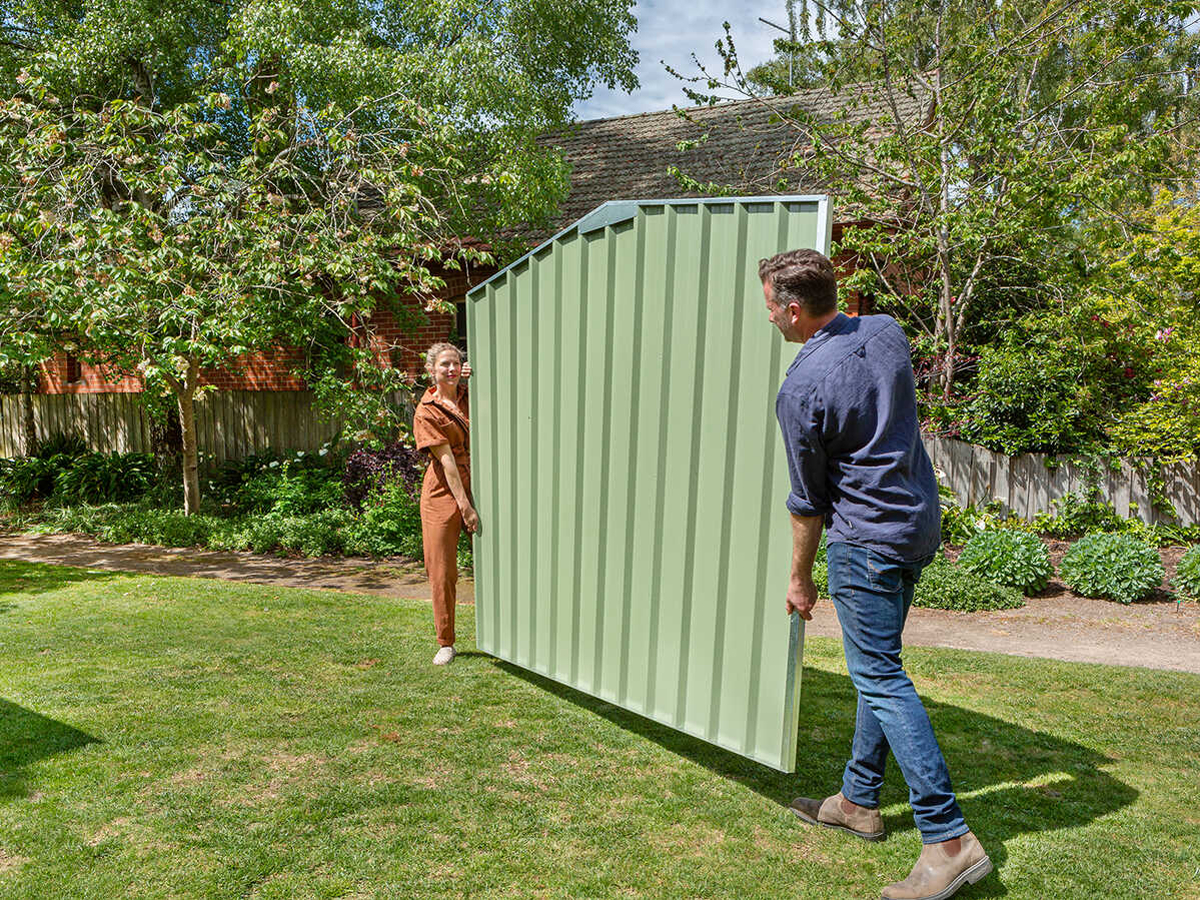
A panel-form shed turns up as pre-assembled panels instead of loose parts. The walls and roof sections are already built, so rather than fixing hundreds of small pieces together, you are joining a handful of large, pre-squared sections.
That changes the whole build. Fewer connections to make. Fewer screws required. Almost no on-site squaring, because the panels are already true when they arrive. No misaligned screw holes, no flimsy sheets bending while you try to hold them in place.
Panel form is not free of trade-offs, and we will not pretend otherwise. It costs more upfront than a flat-pack equivalent, and because the panels arrive pre-built, you need enough access space to get them into your space.
SteelChief sheds are panel form. That is a deliberate choice, and the rest of this page explains why it matters.
The DIY trap, in plain terms
The trap is simple. A flat-pack shed looks like the smart buy on the price tag, then quietly hands you the hard part. Here is where the difference actually bites.
Hundreds of parts. A flat-pack shed can be a box of hundreds of individual parts and screws. A panel-form shed has a fraction of the connections, because the panels turn up already built. Every part you do not have to fix yourself is a part that cannot go wrong.
Two people, most of a weekend. A standard flat-pack shed is often a two-day job for two people, and genuinely easier and safer with a hand, especially when you are holding a wall sheet in place with one arm and a drill with the other. Bigger sheds take longer. Panel-form sheds go up faster because you are handling fewer, larger sections.
Square, or not. A flat-pack shed has to be built true from scratch. Small errors early on stack up. A frame that is slightly out of square becomes a door that will not close and panels that do not quite meet. A panel-form shed turns up square, so that problem is solved before you start.
Where the leaks start. This is the one that costs people later. More parts means more seams and more screw holes, and every seam and every hole is a place water can get in if it is not sealed or lined up properly on the day. Fewer joins means fewer chances to get it wrong.
The half-finished shed. The real worst case is not a bad shed. It is an unfinished one. A build that stalls halfway, or a shed that goes up slightly off and then needs someone paid to come and fix it. Once you are paying a handyman to sort out a flat-pack shed, the saving that made it attractive has quietly gone.
Missing parts. When a shed is hundreds of small components, one missing bracket or a bag of screws left out of the box can stall the whole build. It is a common flat-pack frustration, and it tends to show up halfway through assembly, when you are least able to wait days for a replacement to arrive. A panel-form shed has far fewer parts to check, so there is less to go wrong before you even start.
So which one should you buy?
There is no single right answer. There is a right answer for you, and it comes down to answering these questions.
Go flat-pack if: budget is the main constraint, access is tight and only a flat carton will fit, and you are confident and patient with tools. For the right person, a flat-pack shed is a good-value weekend project.
Go panel form if: you want the shed up quickly and sealed properly, you would rather not spend a weekend squaring panels, or you would sooner the whole thing was assembled without you having to worry about. If it is for storage and you want the problem solved, panel form takes most of the risk out of the equation.
The deciding question usually is not how big the shed is or what it costs. It is how much of the assembly you actually want to do yourself.
The benefits of using SteelChief over a flat-pack
SteelChief sheds are built panel form, so the hardest parts of the flat-pack build are engineered out before the shed reaches your property. Fewer connections, sections that turn up square, and fewer joins to seal.
Handy with a drill? Our pre-assembled panels are designed to go together quickly and cleanly, a fair bit faster than building from scratch out of a box of parts.
Rather not touch a drill at all? We can handle the lot: design, delivery, and professional installation, with one team from start to finish. You do not have to find your own installer or coordinate the build.
Every SteelChief shed is made to order in Australian-standard Colorbond-equivalent steel, and can be paired with our BaseSmart base system, which seals the bottom of the shed where water and debris would otherwise sit and rust would start. It is built to be finished properly, not pieced together from a kit.
Common questions
They can be. A flat-pack shed turns up as hundreds of separate parts that you assemble and line up yourself, usually over a day or more and often with two people. It is manageable if you are confident with tools and patient. If you are not, the build is where the frustration lives.
For a standard backyard flat-pack shed, expect a solid day to a full weekend, depending on size, conditions, and how many hands you have. First-timers take longer. Panel-form sheds go up faster because they arrive as pre-built sections rather than a box of loose parts.
They can, though it is not a given. Flat-pack construction has more seams and more screw holes than panel form, and each one is a potential entry point if it is not sealed or lined up right during the build. Careful assembly keeps the risk down. Poor assembly is where leaks usually start.
Sometimes, but a flat-pack shed is genuinely easier and safer with two people, especially when you are lifting wall and roof sheets into place. Panel-form sheds are more manageable on your own, because there are fewer, larger sections to handle. Building alone, the method matters more than the size.
It depends what you are after. Panel form is faster, turns up square, and has fewer joins to seal, which suits anyone who wants it done properly without the project. Flat-pack is cheaper upfront, ships flat, and is easy to find. Go flat-pack for budget, panel form for ease and finish.
Check what the review is actually rating. A lot of five-star reviews cover the delivery or the ordering, written before the shed is built. The ones worth reading cover the assembly and the finished shed months later. Look for comments on how the parts lined up, whether anything was missing, and how it has held up.
 Getting Your Price


